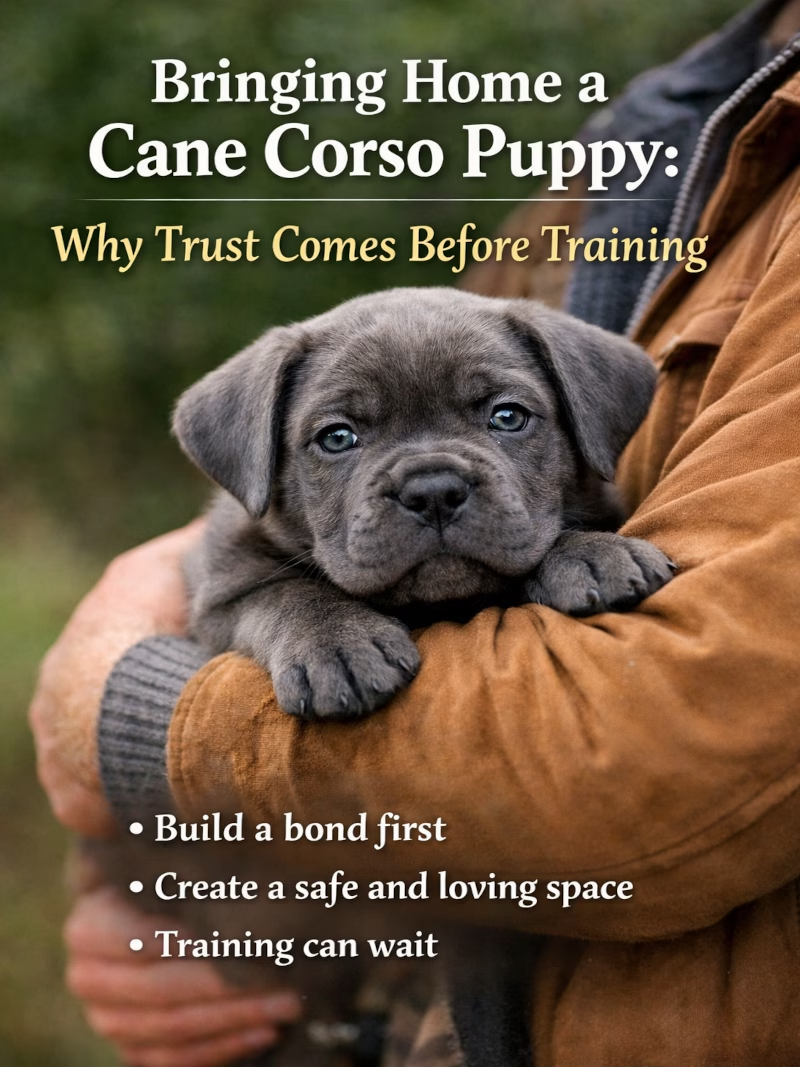
Building Trust With Your New Cane Corso Puppy: Why the Relationship Comes Before Training
Bringing home a Cane Corso puppy is exciting.
You’ve waited for this day. Everyone wants to hold the puppy, take pictures, show them the house, introduce them to friends, and start teaching them everything.
But from your puppy’s perspective, their entire world just changed.
They left the people, dogs, smells, sounds, and routines they knew and suddenly landed somewhere completely unfamiliar.
That means your puppy may seem distracted, unfocused, hesitant, or even disengaged during those first days.
It isn’t necessarily stubbornness. It may simply be uncertainty.
Your first job isn’t to entertain them or teach them twenty things.
Your first job is to make them feel safe.
Your New Puppy Is Adjusting, Not Ignoring You
A new puppy is constantly trying to figure out what this new world means.
Who are these people?
Where am I?
Where do I sleep?
Where does food come from?
What happens when I make a mistake?
Are these hands gentle?
Is this voice calm?
What happens when I stay close to this person?
Every interaction gives your puppy another piece of that puzzle.
Trust doesn’t come from forcing interaction. It comes from hundreds of small experiences where your puppy learns:
You’re safe. You’re predictable. You listen to me. Good things happen when I’m with you.
That relationship becomes the foundation for everything you teach later.
Keep the First Few Days Boring — In a Good Way
Don’t throw a welcome-home party.
Your puppy doesn’t need to meet the neighbors, six relatives, every dog in the family, and three children within the first afternoon.
Give them a smaller world at first.
Let them explore one or two areas of the house rather than giving them access to everything. Keep voices and activity relatively calm. Establish where they eat, sleep, and go potty.
There will be plenty of time for adventures.
A puppy who is overwhelmed may have a difficult time learning anything at all.
Confidence grows much better from successful little experiences than from being overwhelmed by big ones.
Get on Their Level and Do Absolutely Nothing
One of the easiest trust-building exercises requires almost no effort.
Sit or lie on the floor.
Don’t call the puppy repeatedly. Don’t grab them. Don’t keep reaching toward them.
Just exist.
Let your puppy investigate you.
If they walk over and sniff your feet, great.
If they climb onto your legs, great.
If they wander away and come back five minutes later, that’s fine too.
You are teaching something incredibly valuable:
“You can choose to come to me.”
When they do, quietly reward that decision with affection, a little praise, a treat, or gentle play.
This is connection before commands.
Why Calm Connection Matters More Than Commands
It can be tempting to immediately start teaching sits, downs, stays, recalls, and every other command you can think of.
Training is important.
But your puppy first needs to learn who you are.
They are watching you.
They are learning whether your reactions are predictable, whether your hands are gentle, whether your voice is calm, and whether being near you feels safe.
A puppy who trusts you is much more likely to pay attention to you.
They are more likely to check in with you when something unfamiliar happens.
They are more likely to engage with training instead of simply trying to figure out what is happening around them.
Trust improves attention. Trust improves engagement. Trust makes learning easier.
That is why the relationship comes first.
Make the Crate Something They Discover
A crate should become your puppy’s bedroom — not the place where fun suddenly ends.
During the day, put the crate in an area where the puppy can investigate it. Leave the door open whenever it’s safe to do so.
Randomly toss a few pieces of kibble or treats inside and walk away.
Put a favorite toy in there.
Feed meals near the crate and then inside it.
If the puppy walks in voluntarily, wonderful.
You don’t even need to shut the door every time.
Sometimes the best crate-training session is simply:
Puppy walks in → finds something wonderful → walks back out.
You’re building value before asking for confinement.
Over time, begin closing the door for very short periods while the puppy is relaxed and gradually build from there.
Hand-Feed Some of Their Meals
Your puppy’s regular food is one of your easiest training tools.
Take a portion of breakfast or dinner and hand-feed it.
Say the puppy’s name once. When they look toward you, give them a piece.
Take a few steps away. When they follow you, reward them.
Sit on the floor and let them come over for another piece.
You’re quietly teaching their name, attention, recall, and engagement without making everything feel like a formal training session.
You’re also showing your puppy that paying attention to you has value.
Reward the Puppy for Choosing You
Pay attention to the behaviors people normally ignore.
Your puppy follows you into another room?
Reward them occasionally.
They look up at you outside?
Tell them they’re wonderful.
They voluntarily lie beside your feet?
Drop a treat between their paws.
They hear something strange and look toward you?
Calmly acknowledge them.
You’re creating a puppy who learns:
“Checking in with my person is a really good idea.”
That becomes enormously valuable later.
When something strange or frightening happens, you want your Cane Corso to learn that looking toward you is an option.
Play Together — But Don’t Overdo It
Play is one of the fastest ways to build a relationship.
Use a soft tug toy, roll a ball a few feet, play a little chase-the-toy, or scatter several pieces of kibble and let your puppy hunt for them.
Then stop while they’re still having fun.
Puppies don’t need hour-long training sessions.
Five wonderful minutes can accomplish far more than thirty frustrating ones.
Play should leave your puppy wanting to come back for more.
Touch Should Build Trust Too
Your puppy will eventually need their feet handled, nails trimmed, ears examined, mouth checked, and body touched by veterinarians and groomers.
Start making handling pleasant now.
Touch a paw → treat.
Look briefly inside an ear → treat.
Lift a lip → treat.
Touch the tail → treat.
Gently hold the collar → treat.
Keep these experiences brief and positive.
Don’t wrestle the puppy into submission because “they need to get used to it.”
You’re teaching cooperation, not helplessness.
A Cane Corso is going to grow into a very powerful dog. Teaching that puppy that human handling is safe and predictable is an important part of building the relationship.
Let Them Win
This is a big one.
Don’t constantly tell a puppy no.
Show them what does work.
If they’re chewing something inappropriate, trade it for a toy.
If they’re getting wild, they may need a potty break or nap rather than discipline.
If they’re frightened by something, give them distance instead of dragging them toward it.
If they don’t understand what you’re asking, make the exercise easier.
Your puppy isn’t giving you a hard time.
They’re learning how your world works.
Every time you help them succeed instead of simply correcting them, you give them another reason to trust you.
Respect Fear
Young puppies can go through developmental periods when unfamiliar things suddenly seem frightening.
If your puppy is afraid of the vacuum, a garbage can, a strange person, a noise, or something else, don’t force them toward it to “show them it’s fine.”
Give them room.
Let them observe from a comfortable distance.
Reward curiosity.
If they take a step toward something voluntarily, wonderful.
If they choose to retreat, let them.
Confidence comes from discovering “I can handle this,” not from discovering “I can’t escape this.”
Forcing a frightened puppy into an interaction can teach exactly the opposite lesson from the one you intended.
Instead, help your puppy learn that you will listen when they are uncomfortable.
Give Them a Predictable Routine
Trust grows through predictability.
Your puppy doesn’t need a military schedule, but life should begin making sense:
Wake up → potty
Eat → potty
Play → potty
Train for a few minutes → rest
Wake up → potty again
Bedtime happens roughly the same way each evening.
When puppies can predict what’s coming next, the world becomes less confusing.
Your consistency becomes part of their sense of security.
Don’t Forget Sleep
An overtired puppy can look like a badly behaved puppy.
Young puppies need an enormous amount of sleep.
Give them permission to sleep without constantly waking them because someone wants puppy cuddles.
Sometimes the best thing you can do for a puppy who has become wild, mouthy, or unable to settle is simply give them a quiet place to sleep.
Quiet time is part of raising a confident dog.
Practice Tiny Bits of Independence
Bonding doesn’t mean your puppy needs to be attached to you every second.
Give them opportunities to relax with a chew or toy while you’re nearby but not interacting with them.
Walk out of sight briefly and come back.
Let them nap without you touching them.
Gradually teach:
“Sometimes I’m by myself, and that’s okay too.”
A secure relationship isn’t built by making a puppy dependent on you.
It’s built by teaching them that you’re dependable.
Your puppy should learn both sides of the relationship:
My person is there for me.
And:
I can also relax when my person isn’t directly interacting with me.
The Most Important Exercise: Listen to Your Puppy
Every puppy is different.
One puppy may walk into the house like they own it.
Another may need two days to decide the kitchen isn’t terrifying.
Neither puppy is wrong.
Watch their body language.
Pay attention to what makes them curious, relaxed, worried, or overwhelmed.
Then adjust.
You don’t build trust by demanding that a puppy adapt to you immediately.
You build trust by showing them that you’ll help them understand their new world.
This is especially important with a Cane Corso.
They are intelligent, observant dogs. They notice their environment and they notice their people.
Your puppy is learning from you long before they understand every command you give them.
Training Becomes Easier When Trust Comes First
There is nothing wrong with teaching your puppy.
In fact, training should begin early.
But training doesn’t have to mean drilling commands all day.
Some of the most important training happens during ordinary moments:
Your puppy chooses to follow you.
You reward it.
They look at you when they hear a strange noise.
You acknowledge it.
They walk into their crate.
Something good is waiting.
They allow you to touch their paws.
They get rewarded.
They settle beside you.
You let them rest.
These moments may not look like traditional training, but they are teaching your puppy how to live with you.
And when formal training does begin, you already have something valuable:
A puppy who wants to work with you.
Avoid This Common Puppy Training Mistake
One of the easiest mistakes to make with a new puppy is trying to accomplish too much too quickly.
There is pressure to socialize everywhere, teach every command, introduce every person, visit every place, and create the “perfect” puppy immediately.
You don’t have to.
Your puppy has years ahead of them.
You have time to teach.
You have time to expose them to new experiences.
You have time to build reliable obedience.
You don’t need to win every training session.
You need to build a relationship your puppy can rely on.
Remember
You have years to train your dog.
You don’t need a perfect sit on Day One.
You don’t need to visit every store during the first week.
You don’t need everyone you know to meet your puppy immediately.
Build the relationship first.
Sit on the floor.
Let them come to you.
Scatter some treats.
Play for five minutes.
Leave the crate door open and let them discover the surprise inside.
Take them outside and quietly explore together.
Feed them from your hand.
Let them sleep.
Be consistent.
Be patient.
Be someone your puppy learns they can trust.
Because once a puppy truly trusts you, training becomes easier, new experiences become easier, and when something in the world is confusing or frightening, they learn to look toward you instead of facing it alone.
You’re not just teaching a puppy how to live in your home.
You’re teaching them that they are home.
The Serafina Approach
At Serafina Cane Corso, we believe that raising a well-balanced dog starts with relationship-building, not just obedience.
A Cane Corso doesn’t need someone who simply knows how to give commands.
They need someone who is calm, consistent, patient, and willing to listen.
Connection comes before commands — every time.
Build the relationship first.
The training will have something solid to stand on.