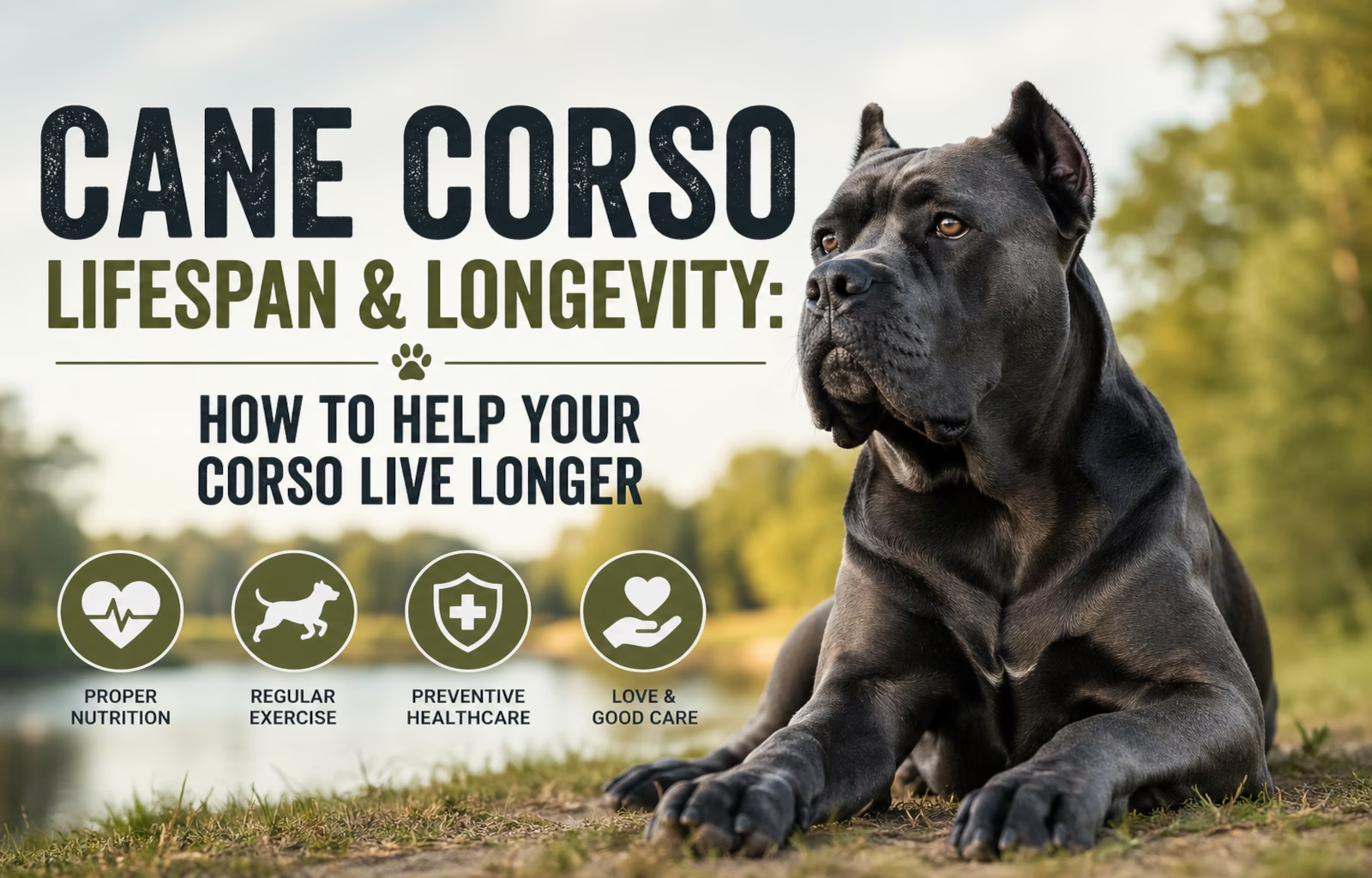
The Golden Years: A Senior Care Guide for the Cane Corso
The average Cane Corso lifespan is somewhere between 8 and 11 years. But anyone who has loved this breed knows the range feels far wider than that — there are Corsos who slip away at eight, and Corsos who push into their early teens with a regal stubbornness that seems almost defiant. The difference, more often than not, isn’t just luck or genetics. It is, in large part, the life you build around them.
At seven years old, your Cane Corso is officially a senior dog. That may feel like a punch to the gut if your dog still charges the back fence every morning with the enthusiasm of a puppy — but the biology doesn’t lie. Giant and large breeds age faster than their smaller counterparts. A Corso at seven is roughly equivalent to a human in their mid-fifties. The joints are accumulating mileage. The organs are working harder. The immune system is less forgiving. And the choices you make now — about food, environment, stress, and veterinary care — will echo forward into every year that follows.
This guide is for the Cane Corso owner who refuses to simply accept the odds.
How Long Do Cane Corsos Live?
The Cane Corso lifespan averages 8 to 11 years, with some dogs falling short of that range and others — with excellent care and a bit of genetic fortune — exceeding it. Large and giant breeds consistently live shorter lives than small breeds, and the Corso is no exception.
Several factors influence how long your Cane Corso lives:
- Genetics — breeding quality, lineage health, and hereditary disease risk
- Reproductive status — whether the dog is intact or altered, and at what age
- Nutrition — what they eat across their entire lifetime
- Environment — toxic load, stress levels, and living conditions
- Veterinary care — how proactive and informed that care is
- The human-dog bond — more physiologically relevant than most owners realize
The encouraging truth is that most of these factors are within your control.
Why Cane Corsos Age Faster Than Small Breeds
Small dogs can live 16 or even 18 years. A Chihuahua at 12 is middle-aged. A Cane Corso at 12 is a marvel.
The leading theory for why large and giant breeds age faster is tied to growth rate and the cellular cost of maintaining a massive body. Bigger dogs produce more growth hormone, which accelerates cellular aging. Their hearts work harder. Their joints carry more load. Their metabolisms run at higher intensity. The very thing that makes the Cane Corso magnificent — that size, that power, that presence — is also the biological tax that shortens the contract.
This isn’t a reason for despair. It’s a reason to be intentional.
The Seven-Year Turning Point in Cane Corso Health
Seven is not an arbitrary number. Veterinary gerontology research consistently marks the 6-to-8-year window as the period when large breeds begin showing measurable changes in organ function, immune response, and musculoskeletal health — even in dogs who appear outwardly healthy.
What shifts at seven in a Cane Corso:
- Cellular inflammation increases. Chronic low-grade inflammation becomes more common and harder for the body to self-regulate.
- Gut microbiome diversity declines. The digestive system becomes less efficient at extracting nutrition and managing immune responses.
- Joint cartilage thins. Early arthritis may be present even without obvious lameness.
- Kidney and liver function may begin to decline subtly. Annual bloodwork becomes essential rather than optional.
- Cancer risk rises sharply. Corsos, like many large breeds, are statistically more vulnerable to osteosarcoma, mast cell tumors, and other cancers as they age.
Understanding this isn’t pessimism. It’s the map you need to plan the journey.
Intact vs. Altered: How Reproductive Status Affects Cane Corso Longevity
The reproductive status of your Cane Corso has genuine implications for lifespan, and the research is more nuanced than the standard advice of “spay or neuter early.”
Intact Male Cane Corsos
Intact male Corsos face elevated risks of testicular cancer and benign prostatic hyperplasia (BPH) as they age. BPH can become a significant quality-of-life issue by seven or eight years old, causing difficulty urinating or defecating. Intact males also tend to carry more chronic stress from hormonal drives — roaming, reactivity, competition — which over a lifetime may have subtle systemic costs.
Some owners and breeders argue that the hormonal milieu of an intact male supports muscle mass, bone density, and overall vitality well into older age — and there is evidence supporting this in the short and medium term. The honest answer is that intact males often live with more vitality in their prime, and more risk as they age.
Intact Female Cane Corsos
Female Corsos carry their own risks with intact status — primarily pyometra (a life-threatening uterine infection) and mammary tumors, the risk of which increases with each heat cycle. Spaying before the second heat dramatically reduces mammary cancer risk, though early spaying in large breeds has been associated with increased risk of joint disorders due to hormonal disruption during development.
The emerging consensus among veterinary researchers is that the timing of spay/neuter matters as much as the decision itself. For large breeds, waiting until 18 to 24 months — or later — before altering may reduce orthopedic and certain cancer risks associated with early hormone removal. This is a conversation to have with a veterinarian who knows large breed medicine deeply.
Nutrition and Cane Corso Longevity: What You Feed Them Changes Everything
Nutrition is where environment trumps genetics most visibly. A genetically gifted dog fed a lifetime of low-quality food will not live as long as a less impressive dog fed thoughtfully. This is increasingly supported by veterinary nutritional science.
Raw Diet for Cane Corsos
The raw food movement is sometimes dismissed as fringe, but the underlying concern — that highly processed kibble cooked at extreme temperatures and preserved with synthetic additives may not represent optimal nutrition for carnivores — has real merit worth taking seriously.
A species-appropriate raw diet for a Cane Corso typically includes:
- Muscle meat — beef, chicken, turkey, pork, lamb
- Raw meaty bones — for calcium, dental health, and mental enrichment
- Organ meat — ideally 10–15% of the diet, including liver and secreting organs
- Fermented foods — raw goat’s milk, kefir, fermented vegetables — for gut microbiome support
- Oily fish — sardines, mackerel — two to three times weekly for omega-3 fatty acids
If raw feeding feels like too large a leap, high-quality freeze-dried raw or minimally processed wet foods with named protein sources and no corn, wheat, or soy are meaningful improvements over standard kibble.
For senior Corsos specifically, slightly elevated protein is generally beneficial. Contrary to old advice about reducing protein in aging dogs, current research suggests that adequate protein helps preserve muscle mass — a critical determinant of both longevity and quality of life.
What to Remove from Your Senior Corso’s Diet
- Heavily processed kibble with rendered “meal” proteins and synthetic preservatives (BHA, BHT, ethoxyquin)
- Excess carbohydrates, which drive inflammation and insulin dysregulation
- Chlorinated tap water — a simple filter makes a measurable difference over a lifetime
Rethinking the Vaccine Schedule for Senior Cane Corsos
The traditional annual vaccine protocol for dogs originated from conservative public health assumptions — not from evidence that annual boosters are necessary for the life of every dog. Titer testing — a blood test that measures circulating antibodies — has demonstrated that many dogs maintain protective immunity for core vaccines like distemper and parvovirus for three years or longer, and sometimes for life.
For a senior Cane Corso, the question of vaccine burden deserves serious consideration. The immune system of a seven-year-old dog is not identical to that of a puppy. Overvaccination has been associated in veterinary literature with immune-mediated diseases, hypersensitivity reactions, and in some research, links to certain vaccine-associated conditions.
A reasonable senior Cane Corso vaccine protocol might look like:
- Rabies as required by local law — request the 3-year vaccine rather than annual when possible
- Titer testing for distemper and parvovirus instead of automatic boosters
- Skipping non-core vaccines (Bordetella, leptospirosis, influenza) unless there is genuine, specific exposure risk
- Spacing out any required vaccines rather than administering multiple on the same day
This is not anti-vaccine. It is proportionate, evidence-informed care. Ask your veterinarian about titer testing. If they dismiss the conversation entirely, consider seeking a second opinion from an integrative veterinary practice.
Environmental Factors and Cane Corso Health
Every Cane Corso lives inside an environment, and that environment either supports or quietly undermines their biology year after year. At seven, the cumulative load of environmental stressors begins to matter more — the body is less resilient, less able to compensate.
Reducing Toxic Load
Dogs live low to the ground. They walk on treated grass, lie on carpets cleaned with synthetic chemicals, drink from plastic bowls, and breathe whatever is in your home’s air. Over a lifetime, this accumulation of low-level environmental toxins — pesticides, flame retardants, synthetic fragrances, mold — has a measurable effect on liver, kidney, and immune function.
Practical steps that make a real difference:
- Switch to stainless steel or ceramic food and water bowls — plastic leaches chemicals, especially with age and heat
- Use pet-safe, non-toxic cleaning products in areas where your dog rests
- Avoid lawn pesticides and herbicides, or keep your dog off treated grass for 48–72 hours minimum
- Filter your dog’s drinking water
- Choose natural fiber bedding when possible
Stress, Cortisol, and Cane Corso Longevity
Chronic stress is a longevity killer in dogs just as in humans. The Cane Corso is a sensitive breed beneath that imposing exterior — deeply bonded to their families, attuned to household tension, affected by instability. A dog living in chronic low-grade stress is bathing their cells in cortisol, which suppresses the immune system, promotes inflammation, and accelerates aging.
Your relationship with your dog, the stability of your household, and the quality of your bond are literally physiological factors in how long your Corso lives. A calm, loved, securely attached Cane Corso has a measurable biological advantage.
Best Supplements for Senior Cane Corsos
For aging Corsos, the following supplements have credible support — some from veterinary research, some from decades of practical use by breeders and integrative practitioners:
- Fish oil (EPA/DHA) — anti-inflammatory, supports joints, skin, coat, and cognitive function; one of the most well-studied supplements in veterinary medicine
- Glucosamine, chondroitin, and MSM — joint support that becomes increasingly important for a heavy breed from age five onward
- Turmeric/curcumin — a natural anti-inflammatory with growing veterinary research support; best absorbed with black pepper and fat
- Probiotics and digestive enzymes — support gut microbiome health, which becomes critical as dogs age
- Medicinal mushrooms — turkey tail, reishi, and lion’s mane are used in integrative veterinary oncology as immune modulators; turkey tail has been studied specifically in dogs with cancer
- Vitamin E and CoQ10 — antioxidants supporting cellular health and cardiac function
- Adaptogenic herbs — ashwagandha and holy basil are used by some holistic practitioners to support stress response and adrenal function in aging dogs
Always introduce supplements gradually and with awareness of your individual dog’s health status.
Exercise and Movement for the Senior Cane Corso
Cane Corsos are working dogs at heart. They need movement, purpose, and physical engagement — but the type of movement matters more as they age.
High-impact activities like repetitive ball chasing, hard running on concrete, or repetitive jumping are harder on aging joints and should be moderated. What serves a senior Corso well:
- Long, steady walks on varied terrain
- Swimming — one of the best forms of low-impact exercise for dogs with joint issues
- Nose work and scent games — deeply satisfying mental exercise that doesn’t stress the body
- Gentle strength work — slow uphill walking, cavaletti poles, balance work — to maintain muscle mass
Keep them moving. A senior Corso who moves regularly will maintain muscle mass, cardiovascular health, and mental sharpness far longer than one who spends most of the day on the couch.
Senior Cane Corso Veterinary Care: What Changes After Seven
Twice-yearly wellness exams are the new standard for senior large breeds — not annual visits. Between the ages of seven and eleven, a great deal can change in six months.
A strong senior wellness protocol for a Cane Corso includes:
- Full bloodwork panel (CBC and chemistry) every six months
- Urinalysis
- Blood pressure measurement
- Cardiac assessment — dilated cardiomyopathy (DCM) is a concern in large breeds
- Orthopedic evaluation
- Regular dental care — periodontal disease is directly linked to systemic inflammation and cardiac disease
- Parasite monitoring with thoughtful, targeted prevention rather than blanket monthly chemical treatments
The Longer Story
The Cane Corsos who make it to twelve and beyond are rarely accidents. They are the dogs whose owners paid attention — who noticed the small changes early, who fed thoughtfully, who kept the environment clean, who honored the relationship deeply. They are dogs who were loved in a way that was also active — curious, engaged, always asking what more could be done.
The Cane Corso asks a lot of us. They are not easy dogs, and they do not live as long as we would wish. But the years they do have can be fuller, richer, and longer than the averages suggest — if we refuse to be passive about it.
Seven isn’t the beginning of the end. It’s the beginning of the most important work you’ll do together.
Frequently Asked Questions: Cane Corso Lifespan & Senior Health
How long do Cane Corsos live? The average Cane Corso lifespan is 8 to 11 years. With attentive care, high-quality nutrition, and proactive veterinary support, some Corsos push past that range — but 8 to 11 reflects what most owners realistically experience.
At what age is a Cane Corso considered a senior? Cane Corsos are generally considered senior dogs at 7 years old. Large breeds age faster than small breeds, and meaningful health changes often begin in the 6-to-8-year window.
Do intact male Cane Corsos live shorter lives? Intact males face higher risks of testicular cancer and prostate issues as they age, which can affect both lifespan and quality of life. The timing of neutering and individual health management both play a role.
Is a raw diet good for senior Cane Corsos? Many owners and integrative veterinarians support raw or minimally processed diets for senior Corsos. Adequate protein is especially important in older dogs to preserve muscle mass. Always transition gradually and consult with a veterinarian familiar with raw feeding.
Should I still vaccinate my senior Cane Corso every year? Titer testing is an increasingly accepted alternative to automatic annual boosters for core vaccines. Talk to your veterinarian about whether your senior Corso’s immunity can be confirmed through titers rather than repeated vaccination.
What supplements help Cane Corsos live longer? Fish oil, joint support supplements (glucosamine, chondroitin, MSM), probiotics, turmeric, and medicinal mushrooms are among the most commonly recommended supplements for aging Corsos. Always introduce new supplements gradually.
This article is intended for educational purposes and reflects a combination of veterinary research and integrative approaches. Always consult with a licensed veterinarian for individualized care decisions for your dog.