Category: Cane Corso Blog

Cane Corso Blog

  • Cane Corso Lifespan & Longevity: How to Help Your Corso Live Longer

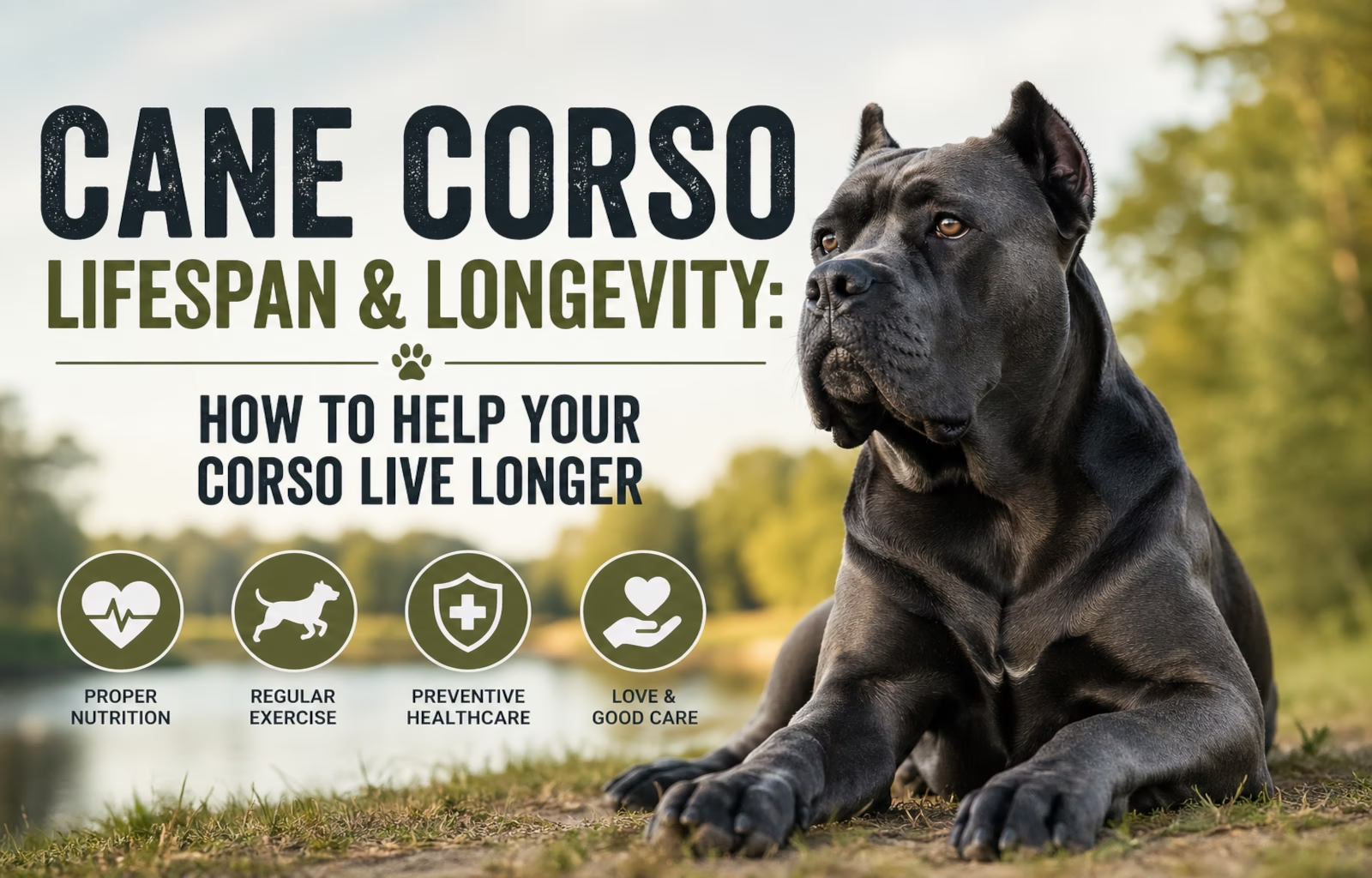
    Cane Corso Lifespan & Longevity: How to Help Your Corso Live Longer


    The Golden Years: A Senior Care Guide for the Cane Corso

    The average Cane Corso lifespan is somewhere between 8 and 11 years. But anyone who has loved this breed knows the range feels far wider than that — there are Corsos who slip away at eight, and Corsos who push into their early teens with a regal stubbornness that seems almost defiant. The difference, more often than not, isn’t just luck or genetics. It is, in large part, the life you build around them.

    At seven years old, your Cane Corso is officially a senior dog. That may feel like a punch to the gut if your dog still charges the back fence every morning with the enthusiasm of a puppy — but the biology doesn’t lie. Giant and large breeds age faster than their smaller counterparts. A Corso at seven is roughly equivalent to a human in their mid-fifties. The joints are accumulating mileage. The organs are working harder. The immune system is less forgiving. And the choices you make now — about food, environment, stress, and veterinary care — will echo forward into every year that follows.

    This guide is for the Cane Corso owner who refuses to simply accept the odds.

    How Long Do Cane Corsos Live?

    The Cane Corso lifespan averages 8 to 11 years, with some dogs falling short of that range and others — with excellent care and a bit of genetic fortune — exceeding it. Large and giant breeds consistently live shorter lives than small breeds, and the Corso is no exception.

    Several factors influence how long your Cane Corso lives:

    • Genetics — breeding quality, lineage health, and hereditary disease risk
    • Reproductive status — whether the dog is intact or altered, and at what age
    • Nutrition — what they eat across their entire lifetime
    • Environment — toxic load, stress levels, and living conditions
    • Veterinary care — how proactive and informed that care is
    • The human-dog bond — more physiologically relevant than most owners realize

    The encouraging truth is that most of these factors are within your control.

    Why Cane Corsos Age Faster Than Small Breeds

    Small dogs can live 16 or even 18 years. A Chihuahua at 12 is middle-aged. A Cane Corso at 12 is a marvel.

    The leading theory for why large and giant breeds age faster is tied to growth rate and the cellular cost of maintaining a massive body. Bigger dogs produce more growth hormone, which accelerates cellular aging. Their hearts work harder. Their joints carry more load. Their metabolisms run at higher intensity. The very thing that makes the Cane Corso magnificent — that size, that power, that presence — is also the biological tax that shortens the contract.

    This isn’t a reason for despair. It’s a reason to be intentional.

    The Seven-Year Turning Point in Cane Corso Health

    Seven is not an arbitrary number. Veterinary gerontology research consistently marks the 6-to-8-year window as the period when large breeds begin showing measurable changes in organ function, immune response, and musculoskeletal health — even in dogs who appear outwardly healthy.

    What shifts at seven in a Cane Corso:

    • Cellular inflammation increases. Chronic low-grade inflammation becomes more common and harder for the body to self-regulate.
    • Gut microbiome diversity declines. The digestive system becomes less efficient at extracting nutrition and managing immune responses.
    • Joint cartilage thins. Early arthritis may be present even without obvious lameness.
    • Kidney and liver function may begin to decline subtly. Annual bloodwork becomes essential rather than optional.
    • Cancer risk rises sharply. Corsos, like many large breeds, are statistically more vulnerable to osteosarcoma, mast cell tumors, and other cancers as they age.

    Understanding this isn’t pessimism. It’s the map you need to plan the journey.

    Intact vs. Altered: How Reproductive Status Affects Cane Corso Longevity

    The reproductive status of your Cane Corso has genuine implications for lifespan, and the research is more nuanced than the standard advice of “spay or neuter early.”

    Intact Male Cane Corsos

    Intact male Corsos face elevated risks of testicular cancer and benign prostatic hyperplasia (BPH) as they age. BPH can become a significant quality-of-life issue by seven or eight years old, causing difficulty urinating or defecating. Intact males also tend to carry more chronic stress from hormonal drives — roaming, reactivity, competition — which over a lifetime may have subtle systemic costs.

    Some owners and breeders argue that the hormonal milieu of an intact male supports muscle mass, bone density, and overall vitality well into older age — and there is evidence supporting this in the short and medium term. The honest answer is that intact males often live with more vitality in their prime, and more risk as they age.

    Intact Female Cane Corsos

    Female Corsos carry their own risks with intact status — primarily pyometra (a life-threatening uterine infection) and mammary tumors, the risk of which increases with each heat cycle. Spaying before the second heat dramatically reduces mammary cancer risk, though early spaying in large breeds has been associated with increased risk of joint disorders due to hormonal disruption during development.

    The emerging consensus among veterinary researchers is that the timing of spay/neuter matters as much as the decision itself. For large breeds, waiting until 18 to 24 months — or later — before altering may reduce orthopedic and certain cancer risks associated with early hormone removal. This is a conversation to have with a veterinarian who knows large breed medicine deeply.

    Nutrition and Cane Corso Longevity: What You Feed Them Changes Everything

    Nutrition is where environment trumps genetics most visibly. A genetically gifted dog fed a lifetime of low-quality food will not live as long as a less impressive dog fed thoughtfully. This is increasingly supported by veterinary nutritional science.

    Raw Diet for Cane Corsos

    The raw food movement is sometimes dismissed as fringe, but the underlying concern — that highly processed kibble cooked at extreme temperatures and preserved with synthetic additives may not represent optimal nutrition for carnivores — has real merit worth taking seriously.

    A species-appropriate raw diet for a Cane Corso typically includes:

    • Muscle meat — beef, chicken, turkey, pork, lamb
    • Raw meaty bones — for calcium, dental health, and mental enrichment
    • Organ meat — ideally 10–15% of the diet, including liver and secreting organs
    • Fermented foods — raw goat’s milk, kefir, fermented vegetables — for gut microbiome support
    • Oily fish — sardines, mackerel — two to three times weekly for omega-3 fatty acids

    If raw feeding feels like too large a leap, high-quality freeze-dried raw or minimally processed wet foods with named protein sources and no corn, wheat, or soy are meaningful improvements over standard kibble.

    For senior Corsos specifically, slightly elevated protein is generally beneficial. Contrary to old advice about reducing protein in aging dogs, current research suggests that adequate protein helps preserve muscle mass — a critical determinant of both longevity and quality of life.

    What to Remove from Your Senior Corso’s Diet

    • Heavily processed kibble with rendered “meal” proteins and synthetic preservatives (BHA, BHT, ethoxyquin)
    • Excess carbohydrates, which drive inflammation and insulin dysregulation
    • Chlorinated tap water — a simple filter makes a measurable difference over a lifetime

    Rethinking the Vaccine Schedule for Senior Cane Corsos

    The traditional annual vaccine protocol for dogs originated from conservative public health assumptions — not from evidence that annual boosters are necessary for the life of every dog. Titer testing — a blood test that measures circulating antibodies — has demonstrated that many dogs maintain protective immunity for core vaccines like distemper and parvovirus for three years or longer, and sometimes for life.

    For a senior Cane Corso, the question of vaccine burden deserves serious consideration. The immune system of a seven-year-old dog is not identical to that of a puppy. Overvaccination has been associated in veterinary literature with immune-mediated diseases, hypersensitivity reactions, and in some research, links to certain vaccine-associated conditions.

    A reasonable senior Cane Corso vaccine protocol might look like:

    • Rabies as required by local law — request the 3-year vaccine rather than annual when possible
    • Titer testing for distemper and parvovirus instead of automatic boosters
    • Skipping non-core vaccines (Bordetella, leptospirosis, influenza) unless there is genuine, specific exposure risk
    • Spacing out any required vaccines rather than administering multiple on the same day

    This is not anti-vaccine. It is proportionate, evidence-informed care. Ask your veterinarian about titer testing. If they dismiss the conversation entirely, consider seeking a second opinion from an integrative veterinary practice.

    Environmental Factors and Cane Corso Health

    Every Cane Corso lives inside an environment, and that environment either supports or quietly undermines their biology year after year. At seven, the cumulative load of environmental stressors begins to matter more — the body is less resilient, less able to compensate.

    Reducing Toxic Load

    Dogs live low to the ground. They walk on treated grass, lie on carpets cleaned with synthetic chemicals, drink from plastic bowls, and breathe whatever is in your home’s air. Over a lifetime, this accumulation of low-level environmental toxins — pesticides, flame retardants, synthetic fragrances, mold — has a measurable effect on liver, kidney, and immune function.

    Practical steps that make a real difference:

    • Switch to stainless steel or ceramic food and water bowls — plastic leaches chemicals, especially with age and heat
    • Use pet-safe, non-toxic cleaning products in areas where your dog rests
    • Avoid lawn pesticides and herbicides, or keep your dog off treated grass for 48–72 hours minimum
    • Filter your dog’s drinking water
    • Choose natural fiber bedding when possible

    Stress, Cortisol, and Cane Corso Longevity

    Chronic stress is a longevity killer in dogs just as in humans. The Cane Corso is a sensitive breed beneath that imposing exterior — deeply bonded to their families, attuned to household tension, affected by instability. A dog living in chronic low-grade stress is bathing their cells in cortisol, which suppresses the immune system, promotes inflammation, and accelerates aging.

    Your relationship with your dog, the stability of your household, and the quality of your bond are literally physiological factors in how long your Corso lives. A calm, loved, securely attached Cane Corso has a measurable biological advantage.

    Best Supplements for Senior Cane Corsos

    For aging Corsos, the following supplements have credible support — some from veterinary research, some from decades of practical use by breeders and integrative practitioners:

    • Fish oil (EPA/DHA) — anti-inflammatory, supports joints, skin, coat, and cognitive function; one of the most well-studied supplements in veterinary medicine
    • Glucosamine, chondroitin, and MSM — joint support that becomes increasingly important for a heavy breed from age five onward
    • Turmeric/curcumin — a natural anti-inflammatory with growing veterinary research support; best absorbed with black pepper and fat
    • Probiotics and digestive enzymes — support gut microbiome health, which becomes critical as dogs age
    • Medicinal mushrooms — turkey tail, reishi, and lion’s mane are used in integrative veterinary oncology as immune modulators; turkey tail has been studied specifically in dogs with cancer
    • Vitamin E and CoQ10 — antioxidants supporting cellular health and cardiac function
    • Adaptogenic herbs — ashwagandha and holy basil are used by some holistic practitioners to support stress response and adrenal function in aging dogs

    Always introduce supplements gradually and with awareness of your individual dog’s health status.

    Exercise and Movement for the Senior Cane Corso

    Cane Corsos are working dogs at heart. They need movement, purpose, and physical engagement — but the type of movement matters more as they age.

    High-impact activities like repetitive ball chasing, hard running on concrete, or repetitive jumping are harder on aging joints and should be moderated. What serves a senior Corso well:

    • Long, steady walks on varied terrain
    • Swimming — one of the best forms of low-impact exercise for dogs with joint issues
    • Nose work and scent games — deeply satisfying mental exercise that doesn’t stress the body
    • Gentle strength work — slow uphill walking, cavaletti poles, balance work — to maintain muscle mass

    Keep them moving. A senior Corso who moves regularly will maintain muscle mass, cardiovascular health, and mental sharpness far longer than one who spends most of the day on the couch.

    Senior Cane Corso Veterinary Care: What Changes After Seven

    Twice-yearly wellness exams are the new standard for senior large breeds — not annual visits. Between the ages of seven and eleven, a great deal can change in six months.

    A strong senior wellness protocol for a Cane Corso includes:

    • Full bloodwork panel (CBC and chemistry) every six months
    • Urinalysis
    • Blood pressure measurement
    • Cardiac assessment — dilated cardiomyopathy (DCM) is a concern in large breeds
    • Orthopedic evaluation
    • Regular dental care — periodontal disease is directly linked to systemic inflammation and cardiac disease
    • Parasite monitoring with thoughtful, targeted prevention rather than blanket monthly chemical treatments

    The Longer Story

    The Cane Corsos who make it to twelve and beyond are rarely accidents. They are the dogs whose owners paid attention — who noticed the small changes early, who fed thoughtfully, who kept the environment clean, who honored the relationship deeply. They are dogs who were loved in a way that was also active — curious, engaged, always asking what more could be done.

    The Cane Corso asks a lot of us. They are not easy dogs, and they do not live as long as we would wish. But the years they do have can be fuller, richer, and longer than the averages suggest — if we refuse to be passive about it.

    Seven isn’t the beginning of the end. It’s the beginning of the most important work you’ll do together.

    Frequently Asked Questions: Cane Corso Lifespan & Senior Health

    How long do Cane Corsos live? The average Cane Corso lifespan is 8 to 11 years. With attentive care, high-quality nutrition, and proactive veterinary support, some Corsos push past that range — but 8 to 11 reflects what most owners realistically experience.

    At what age is a Cane Corso considered a senior? Cane Corsos are generally considered senior dogs at 7 years old. Large breeds age faster than small breeds, and meaningful health changes often begin in the 6-to-8-year window.

    Do intact male Cane Corsos live shorter lives? Intact males face higher risks of testicular cancer and prostate issues as they age, which can affect both lifespan and quality of life. The timing of neutering and individual health management both play a role.

    Is a raw diet good for senior Cane Corsos? Many owners and integrative veterinarians support raw or minimally processed diets for senior Corsos. Adequate protein is especially important in older dogs to preserve muscle mass. Always transition gradually and consult with a veterinarian familiar with raw feeding.

    Should I still vaccinate my senior Cane Corso every year? Titer testing is an increasingly accepted alternative to automatic annual boosters for core vaccines. Talk to your veterinarian about whether your senior Corso’s immunity can be confirmed through titers rather than repeated vaccination.

    What supplements help Cane Corsos live longer? Fish oil, joint support supplements (glucosamine, chondroitin, MSM), probiotics, turmeric, and medicinal mushrooms are among the most commonly recommended supplements for aging Corsos. Always introduce new supplements gradually.

    This article is intended for educational purposes and reflects a combination of veterinary research and integrative approaches. Always consult with a licensed veterinarian for individualized care decisions for your dog.

  • Bringing Home a Cane Corso Puppy: Why Trust Comes Before Training

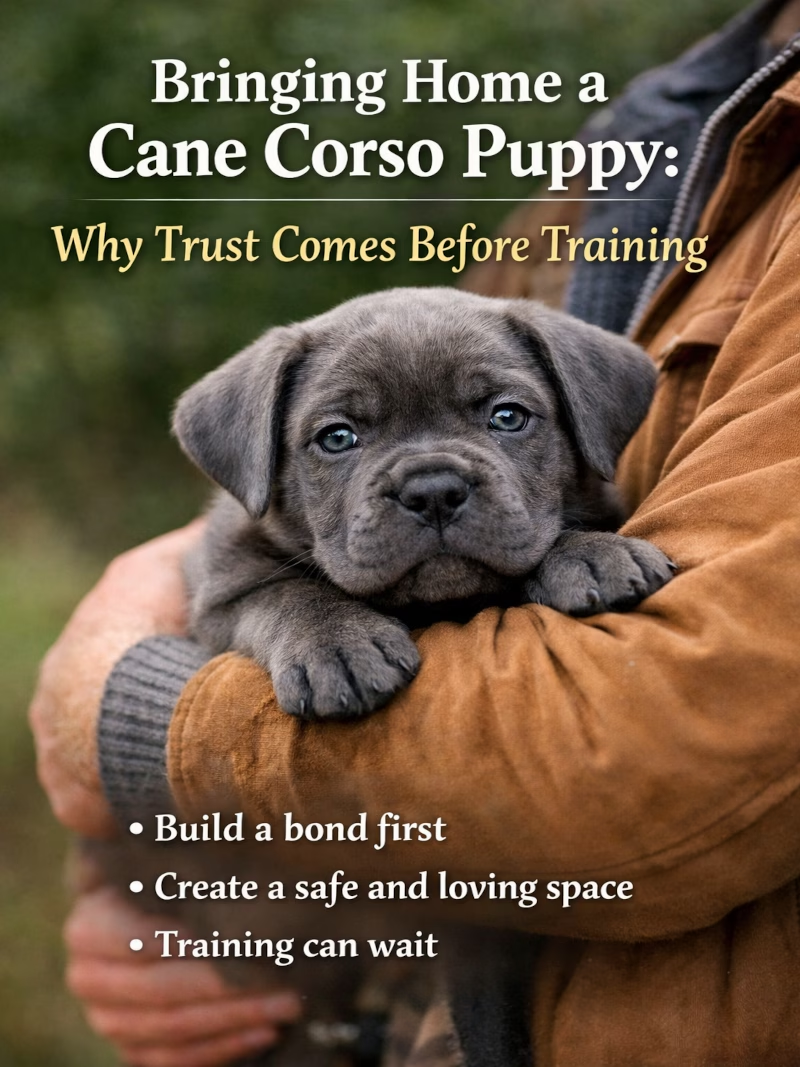
    Bringing Home a Cane Corso Puppy - Why Trust Comes Before Training

    Building Trust With Your New Cane Corso Puppy: Why the Relationship Comes Before Training

    Bringing home a Cane Corso puppy is exciting.

    You’ve waited for this day. Everyone wants to hold the puppy, take pictures, show them the house, introduce them to friends, and start teaching them everything.

    But from your puppy’s perspective, their entire world just changed.

    They left the people, dogs, smells, sounds, and routines they knew and suddenly landed somewhere completely unfamiliar.

    That means your puppy may seem distracted, unfocused, hesitant, or even disengaged during those first days.

    It isn’t necessarily stubbornness. It may simply be uncertainty.

    Your first job isn’t to entertain them or teach them twenty things.

    Your first job is to make them feel safe.

    Your New Puppy Is Adjusting, Not Ignoring You

    A new puppy is constantly trying to figure out what this new world means.

    Who are these people?

    Where am I?

    Where do I sleep?

    Where does food come from?

    What happens when I make a mistake?

    Are these hands gentle?

    Is this voice calm?

    What happens when I stay close to this person?

    Every interaction gives your puppy another piece of that puzzle.

    Trust doesn’t come from forcing interaction. It comes from hundreds of small experiences where your puppy learns:

    You’re safe. You’re predictable. You listen to me. Good things happen when I’m with you.

    That relationship becomes the foundation for everything you teach later.


    Keep the First Few Days Boring — In a Good Way

    Don’t throw a welcome-home party.

    Your puppy doesn’t need to meet the neighbors, six relatives, every dog in the family, and three children within the first afternoon.

    Give them a smaller world at first.

    Let them explore one or two areas of the house rather than giving them access to everything. Keep voices and activity relatively calm. Establish where they eat, sleep, and go potty.

    There will be plenty of time for adventures.

    A puppy who is overwhelmed may have a difficult time learning anything at all.

    Confidence grows much better from successful little experiences than from being overwhelmed by big ones.


    Get on Their Level and Do Absolutely Nothing

    One of the easiest trust-building exercises requires almost no effort.

    Sit or lie on the floor.

    Don’t call the puppy repeatedly. Don’t grab them. Don’t keep reaching toward them.

    Just exist.

    Let your puppy investigate you.

    If they walk over and sniff your feet, great.

    If they climb onto your legs, great.

    If they wander away and come back five minutes later, that’s fine too.

    You are teaching something incredibly valuable:

    “You can choose to come to me.”

    When they do, quietly reward that decision with affection, a little praise, a treat, or gentle play.

    This is connection before commands.


    Why Calm Connection Matters More Than Commands

    It can be tempting to immediately start teaching sits, downs, stays, recalls, and every other command you can think of.

    Training is important.

    But your puppy first needs to learn who you are.

    They are watching you.

    They are learning whether your reactions are predictable, whether your hands are gentle, whether your voice is calm, and whether being near you feels safe.

    A puppy who trusts you is much more likely to pay attention to you.

    They are more likely to check in with you when something unfamiliar happens.

    They are more likely to engage with training instead of simply trying to figure out what is happening around them.

    Trust improves attention. Trust improves engagement. Trust makes learning easier.

    That is why the relationship comes first.


    Make the Crate Something They Discover

    A crate should become your puppy’s bedroom — not the place where fun suddenly ends.

    During the day, put the crate in an area where the puppy can investigate it. Leave the door open whenever it’s safe to do so.

    Randomly toss a few pieces of kibble or treats inside and walk away.

    Put a favorite toy in there.

    Feed meals near the crate and then inside it.

    If the puppy walks in voluntarily, wonderful.

    You don’t even need to shut the door every time.

    Sometimes the best crate-training session is simply:

    Puppy walks in → finds something wonderful → walks back out.

    You’re building value before asking for confinement.

    Over time, begin closing the door for very short periods while the puppy is relaxed and gradually build from there.


    Hand-Feed Some of Their Meals

    Your puppy’s regular food is one of your easiest training tools.

    Take a portion of breakfast or dinner and hand-feed it.

    Say the puppy’s name once. When they look toward you, give them a piece.

    Take a few steps away. When they follow you, reward them.

    Sit on the floor and let them come over for another piece.

    You’re quietly teaching their name, attention, recall, and engagement without making everything feel like a formal training session.

    You’re also showing your puppy that paying attention to you has value.


    Reward the Puppy for Choosing You

    Pay attention to the behaviors people normally ignore.

    Your puppy follows you into another room?

    Reward them occasionally.

    They look up at you outside?

    Tell them they’re wonderful.

    They voluntarily lie beside your feet?

    Drop a treat between their paws.

    They hear something strange and look toward you?

    Calmly acknowledge them.

    You’re creating a puppy who learns:

    “Checking in with my person is a really good idea.”

    That becomes enormously valuable later.

    When something strange or frightening happens, you want your Cane Corso to learn that looking toward you is an option.


    Play Together — But Don’t Overdo It

    Play is one of the fastest ways to build a relationship.

    Use a soft tug toy, roll a ball a few feet, play a little chase-the-toy, or scatter several pieces of kibble and let your puppy hunt for them.

    Then stop while they’re still having fun.

    Puppies don’t need hour-long training sessions.

    Five wonderful minutes can accomplish far more than thirty frustrating ones.

    Play should leave your puppy wanting to come back for more.


    Touch Should Build Trust Too

    Your puppy will eventually need their feet handled, nails trimmed, ears examined, mouth checked, and body touched by veterinarians and groomers.

    Start making handling pleasant now.

    Touch a paw → treat.

    Look briefly inside an ear → treat.

    Lift a lip → treat.

    Touch the tail → treat.

    Gently hold the collar → treat.

    Keep these experiences brief and positive.

    Don’t wrestle the puppy into submission because “they need to get used to it.”

    You’re teaching cooperation, not helplessness.

    A Cane Corso is going to grow into a very powerful dog. Teaching that puppy that human handling is safe and predictable is an important part of building the relationship.


    Let Them Win

    This is a big one.

    Don’t constantly tell a puppy no.

    Show them what does work.

    If they’re chewing something inappropriate, trade it for a toy.

    If they’re getting wild, they may need a potty break or nap rather than discipline.

    If they’re frightened by something, give them distance instead of dragging them toward it.

    If they don’t understand what you’re asking, make the exercise easier.

    Your puppy isn’t giving you a hard time.

    They’re learning how your world works.

    Every time you help them succeed instead of simply correcting them, you give them another reason to trust you.


    Respect Fear

    Young puppies can go through developmental periods when unfamiliar things suddenly seem frightening.

    If your puppy is afraid of the vacuum, a garbage can, a strange person, a noise, or something else, don’t force them toward it to “show them it’s fine.”

    Give them room.

    Let them observe from a comfortable distance.

    Reward curiosity.

    If they take a step toward something voluntarily, wonderful.

    If they choose to retreat, let them.

    Confidence comes from discovering “I can handle this,” not from discovering “I can’t escape this.”

    Forcing a frightened puppy into an interaction can teach exactly the opposite lesson from the one you intended.

    Instead, help your puppy learn that you will listen when they are uncomfortable.


    Give Them a Predictable Routine

    Trust grows through predictability.

    Your puppy doesn’t need a military schedule, but life should begin making sense:

    Wake up → potty

    Eat → potty

    Play → potty

    Train for a few minutes → rest

    Wake up → potty again

    Bedtime happens roughly the same way each evening.

    When puppies can predict what’s coming next, the world becomes less confusing.

    Your consistency becomes part of their sense of security.


    Don’t Forget Sleep

    An overtired puppy can look like a badly behaved puppy.

    Young puppies need an enormous amount of sleep.

    Give them permission to sleep without constantly waking them because someone wants puppy cuddles.

    Sometimes the best thing you can do for a puppy who has become wild, mouthy, or unable to settle is simply give them a quiet place to sleep.

    Quiet time is part of raising a confident dog.


    Practice Tiny Bits of Independence

    Bonding doesn’t mean your puppy needs to be attached to you every second.

    Give them opportunities to relax with a chew or toy while you’re nearby but not interacting with them.

    Walk out of sight briefly and come back.

    Let them nap without you touching them.

    Gradually teach:

    “Sometimes I’m by myself, and that’s okay too.”

    A secure relationship isn’t built by making a puppy dependent on you.

    It’s built by teaching them that you’re dependable.

    Your puppy should learn both sides of the relationship:

    My person is there for me.

    And:

    I can also relax when my person isn’t directly interacting with me.


    The Most Important Exercise: Listen to Your Puppy

    Every puppy is different.

    One puppy may walk into the house like they own it.

    Another may need two days to decide the kitchen isn’t terrifying.

    Neither puppy is wrong.

    Watch their body language.

    Pay attention to what makes them curious, relaxed, worried, or overwhelmed.

    Then adjust.

    You don’t build trust by demanding that a puppy adapt to you immediately.

    You build trust by showing them that you’ll help them understand their new world.

    This is especially important with a Cane Corso.

    They are intelligent, observant dogs. They notice their environment and they notice their people.

    Your puppy is learning from you long before they understand every command you give them.


    Training Becomes Easier When Trust Comes First

    There is nothing wrong with teaching your puppy.

    In fact, training should begin early.

    But training doesn’t have to mean drilling commands all day.

    Some of the most important training happens during ordinary moments:

    Your puppy chooses to follow you.

    You reward it.

    They look at you when they hear a strange noise.

    You acknowledge it.

    They walk into their crate.

    Something good is waiting.

    They allow you to touch their paws.

    They get rewarded.

    They settle beside you.

    You let them rest.

    These moments may not look like traditional training, but they are teaching your puppy how to live with you.

    And when formal training does begin, you already have something valuable:

    A puppy who wants to work with you.


    Avoid This Common Puppy Training Mistake

    One of the easiest mistakes to make with a new puppy is trying to accomplish too much too quickly.

    There is pressure to socialize everywhere, teach every command, introduce every person, visit every place, and create the “perfect” puppy immediately.

    You don’t have to.

    Your puppy has years ahead of them.

    You have time to teach.

    You have time to expose them to new experiences.

    You have time to build reliable obedience.

    You don’t need to win every training session.

    You need to build a relationship your puppy can rely on.


    Remember

    You have years to train your dog.

    You don’t need a perfect sit on Day One.

    You don’t need to visit every store during the first week.

    You don’t need everyone you know to meet your puppy immediately.

    Build the relationship first.

    Sit on the floor.

    Let them come to you.

    Scatter some treats.

    Play for five minutes.

    Leave the crate door open and let them discover the surprise inside.

    Take them outside and quietly explore together.

    Feed them from your hand.

    Let them sleep.

    Be consistent.

    Be patient.

    Be someone your puppy learns they can trust.

    Because once a puppy truly trusts you, training becomes easier, new experiences become easier, and when something in the world is confusing or frightening, they learn to look toward you instead of facing it alone.

    You’re not just teaching a puppy how to live in your home.

    You’re teaching them that they are home.


    The Serafina Approach

    At Serafina Cane Corso, we believe that raising a well-balanced dog starts with relationship-building, not just obedience.

    A Cane Corso doesn’t need someone who simply knows how to give commands.

    They need someone who is calm, consistent, patient, and willing to listen.

    Connection comes before commands — every time.

    Build the relationship first.

    The training will have something solid to stand on.

  • 10 Things to know about Corsos’

    10 Things to know about Corsos’

    Cane Corsos are a popular and powerful dog breed, often recognized for their imposing appearance and strong guarding instincts.
    Here are 10 things to know about them:
    1. Italian Origins
    The Cane Corso, often simply called the “Corso,” originates from Italy. The breed was historically used for hunting, guarding, and working on farms, particularly for tasks like herding and protection of livestock.
    2. Large and Muscular
    Corsos are large dogs with a muscular, athletic build. Males typically weigh between 99–110 pounds, while females usually weigh 85–99 pounds. They stand about 24–28 inches tall at the shoulder.
    3. Protective Nature
    Corsos are known for their excellent guarding instincts. They are protective of their family and home, making them excellent watchdogs. Early socialization is key to ensuring they are well-adjusted and not overly territorial or aggressive.
    4. Intelligent but Independent
    The Cane Corso is a highly intelligent breed, but they can also be independent and sometimes stubborn. They are trainable, but they require a firm, consistent, and experienced handler who can provide them with structure.
    5. Socialization is Crucial
    Despite their protective nature, they are often good with families and other pets when properly socialized from a young age. Early exposure to different people, environments, and animals can help curb any aggressive tendencies.
    6. Short Coat and Grooming
    Cane Corsos have short, dense coats that require minimal grooming. Brushing once a week is typically sufficient to keep their coat healthy, though they do shed, especially during seasonal changes.
    7. High Energy and Exercise Needs
    While they may have a calm demeanor indoors, Corsos need plenty of exercise to stay happy and healthy. Daily walks, runs, and mental stimulation through training or puzzle toys are essential.
    8. Health Considerations
    Like many large breeds, Cane Corsos are prone to certain health issues, such as hip dysplasia, heart problems (like dilated cardiomyopathy), and bloat (gastric torsion). Regular vet check-ups and a balanced diet are essential to keeping them in top shape.
    9. Loyal and Affectionate
    Though they are often seen as fierce protectors, Corsos are very loyal and affectionate with their families. They tend to bond strongly with their owners and are often described as “velcro dogs,” meaning they love to be close to their people.
    10. Longevity and Lifespan
    The average lifespan of a Cane Corso is between 9 and 12 years. While they are generally a healthy breed, maintaining a good diet, regular exercise, and preventive healthcare can contribute to a longer, happier life.